
The Minnesota Government Data Practices Act
The Minnesota Government Data Practices Act, or MGDPA, is Chapter 13 of the Minnesota Statutes. Section 13.03 says government data are public unless another statute, federal law, or temporary classification says otherwise. Inspection of public data is free. Copies can be charged at statutory or actual-cost rates, with a cap of 25 cents per page for the first 100 black-and-white letter or legal pages of public data. The MGDPA covers Dakota County's county government records; court records sit under the Judicial Branch's separate access rules.
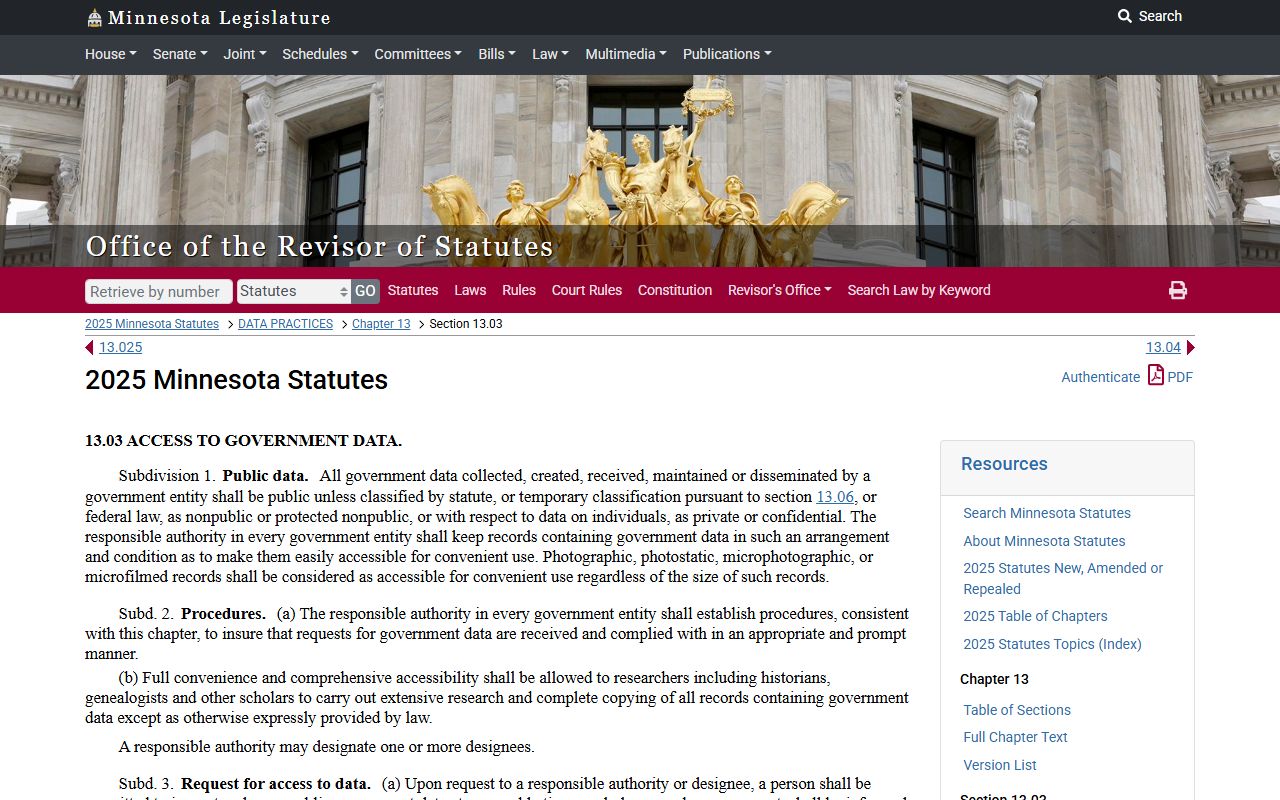
Minn. Stat. 13.03 is the default-public rule, the inspection-free rule, and the copy-fee cap. Read it before negotiating any fee or response timeline with a Minnesota government entity.
Dakota County Data Practices Office
Dakota County says it is subject to the MGDPA, Minnesota Statutes Chapter 13, and Minnesota Rules 1205. The county's Data Practices page lists the Data Practices Compliance contact and the separate public-data and data-subject request links. The Data Practices Compliance email is data.practices@co.dakota.mn.us. Public-data requests are for data classified as public; data-subject requests are for data about the requester and the requester's rights under the MGDPA. The two paths use different forms and different scopes.
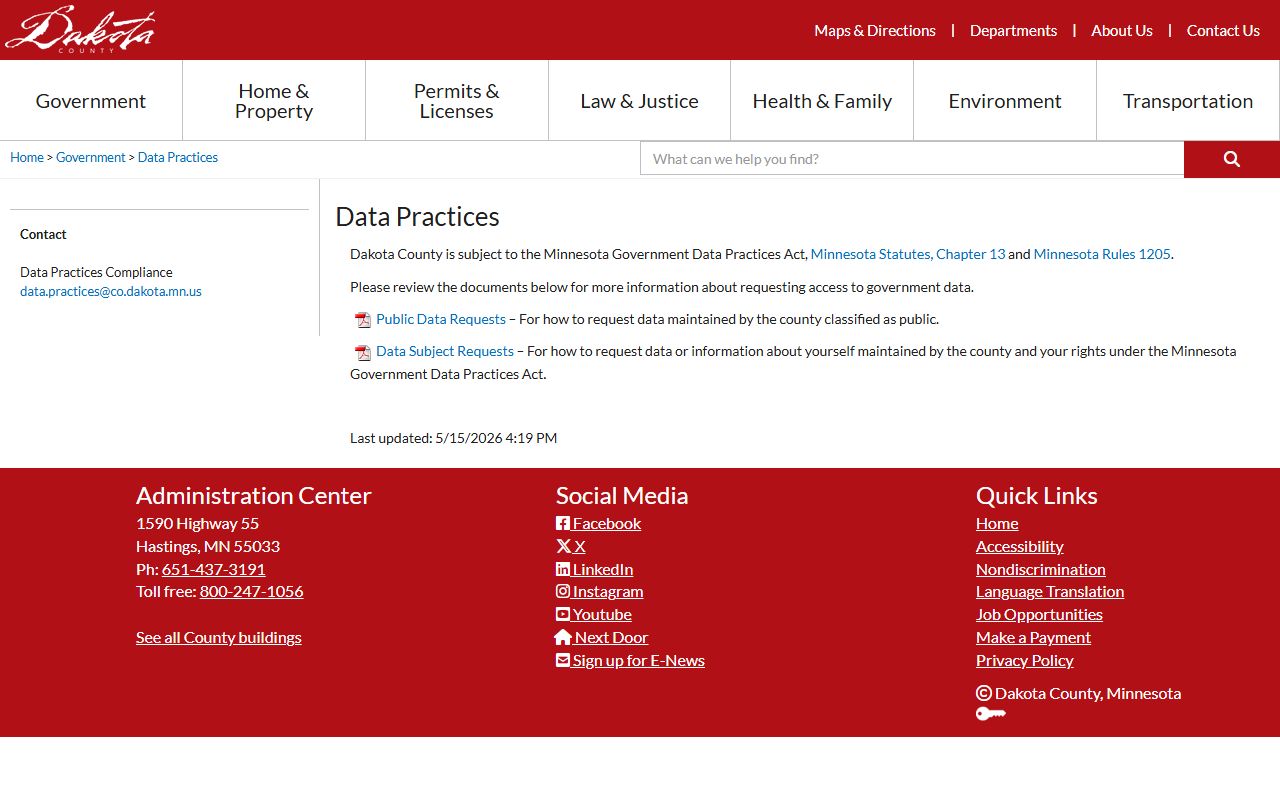
The Dakota County Data Practices page is the right starting point for any non-court Dakota County data request. Use the linked PDF request forms when submitting a request.
Three Workflows: County, Court, and BCA
Dakota County data requests follow three main workflows depending on the holder of the record. County government data goes through Dakota County Data Practices. Court records go through Dakota County District Court Administration. Criminal history records go through the BCA's public criminal history search. A reader who picks the right workflow at the start saves time and avoids a referral loop.
| Workflow | Right Office | What It Covers |
|---|---|---|
| County data request | Dakota County Data Practices, data.practices@co.dakota.mn.us | County department records, programs, administrative files, many sheriff administrative records. |
| Court records request | Dakota County District Court Administration, 651-377-7180 | Court case files, certified copies, dockets, hearing records, judgments. |
| Criminal history request | Minnesota BCA Public Criminal History Search | Fingerprint-linked criminal history for employment, housing, volunteer screening. |
How to File a Dakota County Public Records Request
A Dakota County public data request can be submitted in writing to the county's Data Practices Compliance contact, by completing the county's public data request form, or by emailing data.practices@co.dakota.mn.us with a clear description of the data requested. The county's request form is published as a PDF; the form is for county-maintained public data. Court records use a separate workflow at Court Administration.
- Identify the data holder. County department, court, sheriff, or other.
- For county data, open the Dakota County Data Practices page and choose the public-data request route.
- Describe the data requested as specifically as possible (department, dates, subject).
- Pick the access method: inspection (free) or copy (per statute).
- Provide contact information and a preferred response method.
- Submit the request by email, mail, or the published PDF process.
- For court records, contact Court Administration at 651-377-7180 instead.
- For criminal history records, use the BCA's public criminal history search.
Dakota County Public Data Request Form Fields
The official Dakota County Public Data Requests PDF was not text-extractable in this research pass, so the field list below is captured from the workflow itself. Verify exact field labels by reviewing the PDF before submission.
| Field Label | Type | Required | Notes / Format |
|---|---|---|---|
| Requester name and contact | Text | Unspecified | Use the Data Practices Compliance contact if unsure. |
| Description of data requested | Text | Unspecified | Identify public data maintained by Dakota County. |
| Preferred access / copy method | Checkbox / Text | Unspecified | Likely inspect, copy, electronic, or mail. |
| Department / data area | Text | Unspecified | Use Data Practices Compliance if unknown. |
Dakota County Public Records Fees
Inspection of public data is free under Minn. Stat. 13.03. Copies are governed by the statute's fee rules. For 100 or fewer black-and-white letter or legal pages, the fee cannot exceed 25 cents per page. For larger requests, a government entity may charge actual costs for search, retrieval, copying, certification, and electronic transmission, but cannot charge for separating public from not-public data. For court copies and certified court documents, fees follow Minn. Stat. 357.021, the court administrator fee statute.
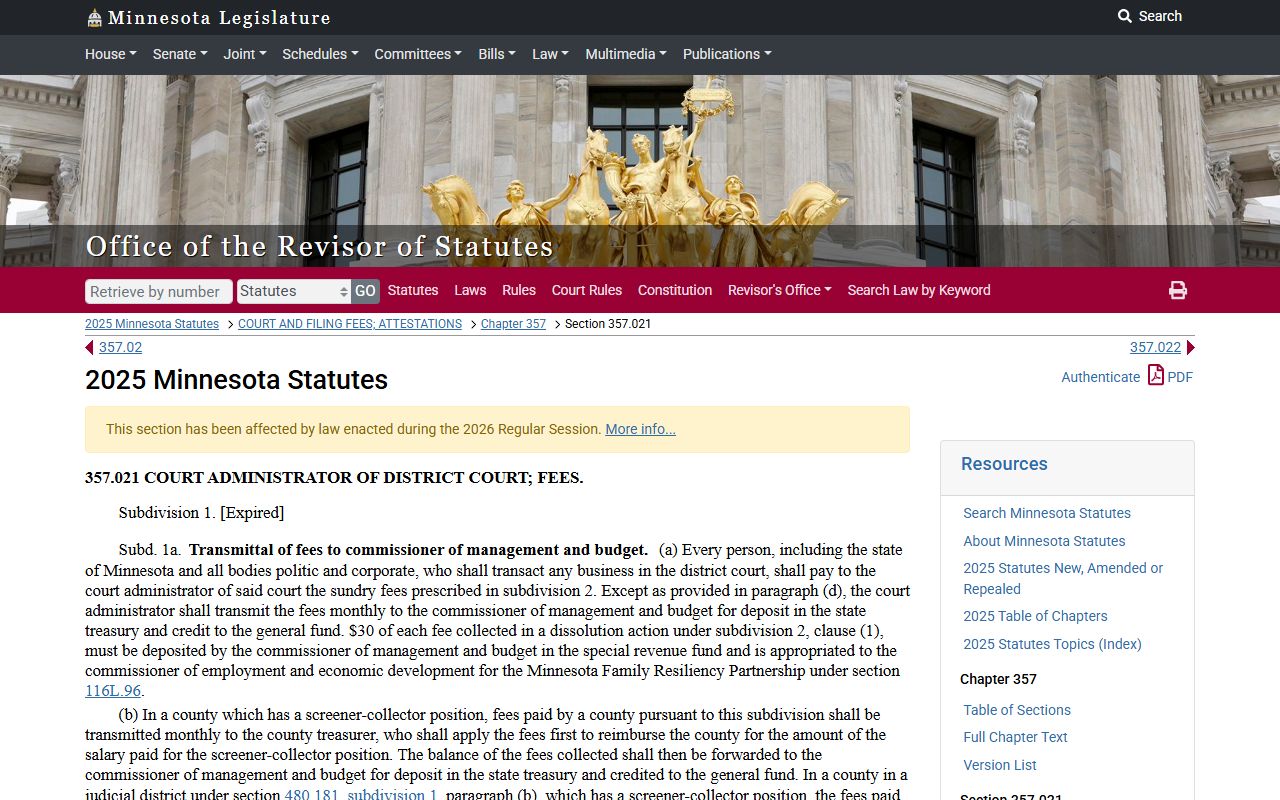
The court administrator fee statute is the basis for filing fees, certified-copy fees, and many other court charges in Dakota County District Court.
| Item | Amount |
|---|---|
| Public data inspection | Free |
| Public data copies, 100 or fewer black-and-white letter/legal pages | Up to $0.25 per page |
| Public data copies, larger requests | Actual costs per Minn. Stat. 13.03 |
| Court copy and certified copy fees | Per Minn. Stat. 357.021 |
Law Enforcement Data Under Minnesota Statute
Minn. Stat. 13.82 governs comprehensive law enforcement data. The statute separates public arrest data, request-for-service data, and response/incident data from active investigative data, protected victim and witness data, and certain confidential records. That distinction is the reason the Dakota County Sheriff publishes a current-custody jail roster but does not publish active investigative reports.
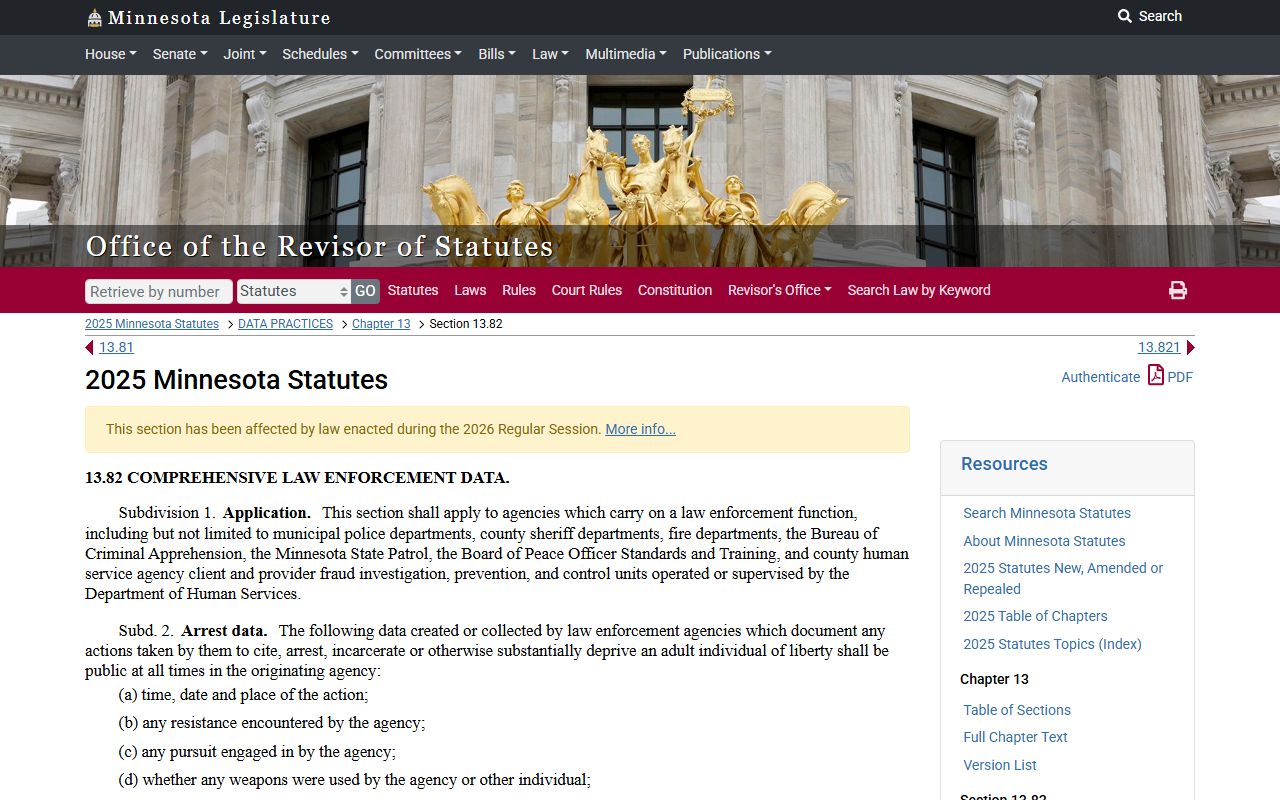
Section 13.82 is the right citation for many law enforcement record requests, including arrest data, public crash reports, and request-for-service summaries.
Corrections and Detention Data
Minn. Stat. 13.85 covers corrections and detention data. Some inmate information is public, while medical, mental health, classification, security, visitor, and private correctional data are restricted. That is why the Dakota County jail search publishes only current-custody public fields and why the county warns that information should not be relied on for legal action.
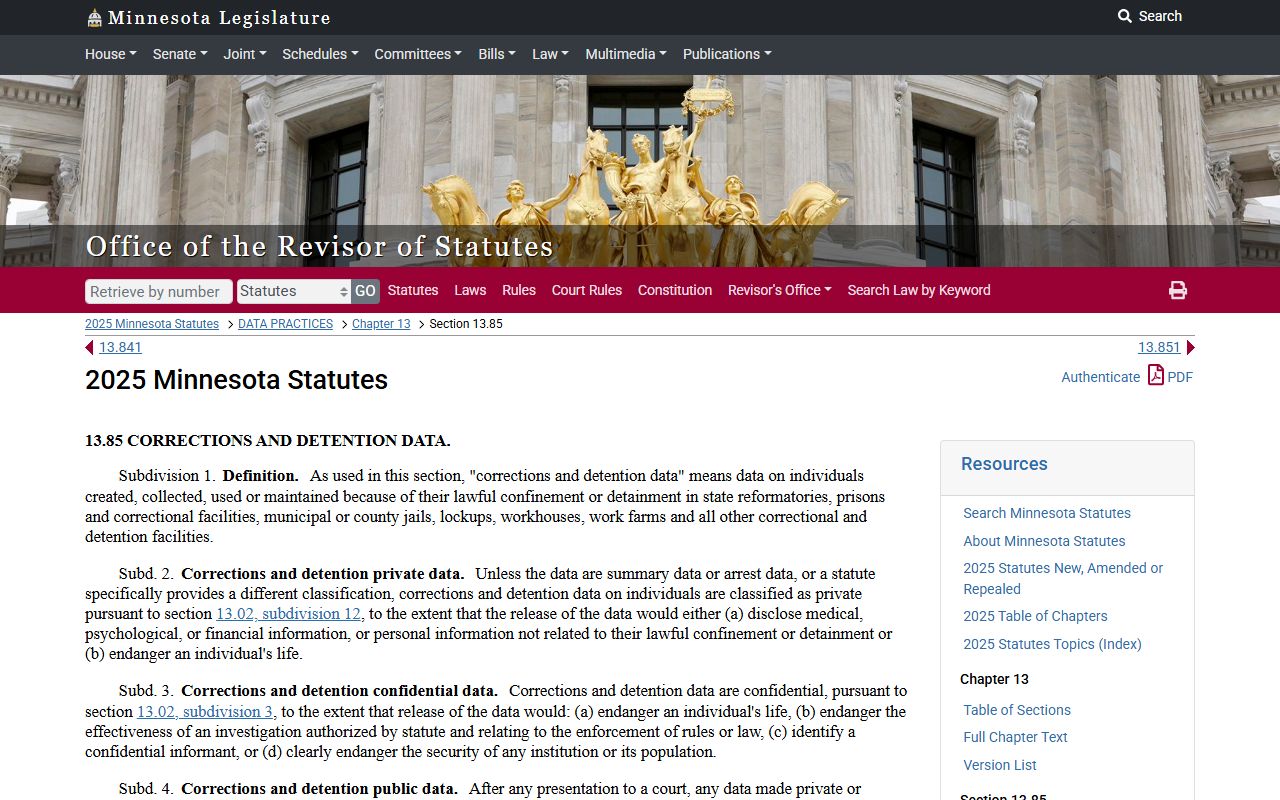
Section 13.85 is the right citation for jail-data requests, including custody data, jail incidents, and related correctional records.
Restricted Public Records in Dakota County
Several categories of Dakota County data are not freely available even with a public-data request. Active investigative data under 13.82, medical and classification data under 13.85, juvenile records under Minn. Stat. 260B.171, adoption records under Minn. Stat. 259.61, and predatory offender registry data under Minn. Stat. 243.166 all carry separate access rules. For court matters, the Minnesota Rules of Public Access set additional restrictions, and MCRO excludes certain case categories from remote access even when the underlying case is public at the courthouse terminal.
Note: A Dakota County public records request cannot pierce a statutory classification; if the data is not public, the office must withhold it under Minn. Stat. 13.03 unless a court order or statutory exception applies.
Data Subject Requests in Dakota County
A Dakota County data subject request is different from a public-data request. A data subject is the person the data is about, and Minnesota Statutes give that person special rights to view private and confidential data that the county maintains about them. The Data Practices page links a separate Data Subject Request workflow, and the Data Practices Compliance contact at data.practices@co.dakota.mn.us routes the request to the correct department. For court records about the data subject, the request goes to Court Administration under the Judicial Branch's own access rules.
Response timelines under Minn. Stat. 13.03 require copies to be supplied as soon as reasonably possible when not available immediately. For remote-access public data stored electronically, inspection can include remote access with the ability to print or download on the public's own equipment. For commercial-value databases or enhanced remote access, Minn. Stat. 13.03 allows certain additional charges tied to development costs or enhanced access when authorized.